5 Things to Check Before Buying a Car in Bangladesh
2026-09-23 15:48
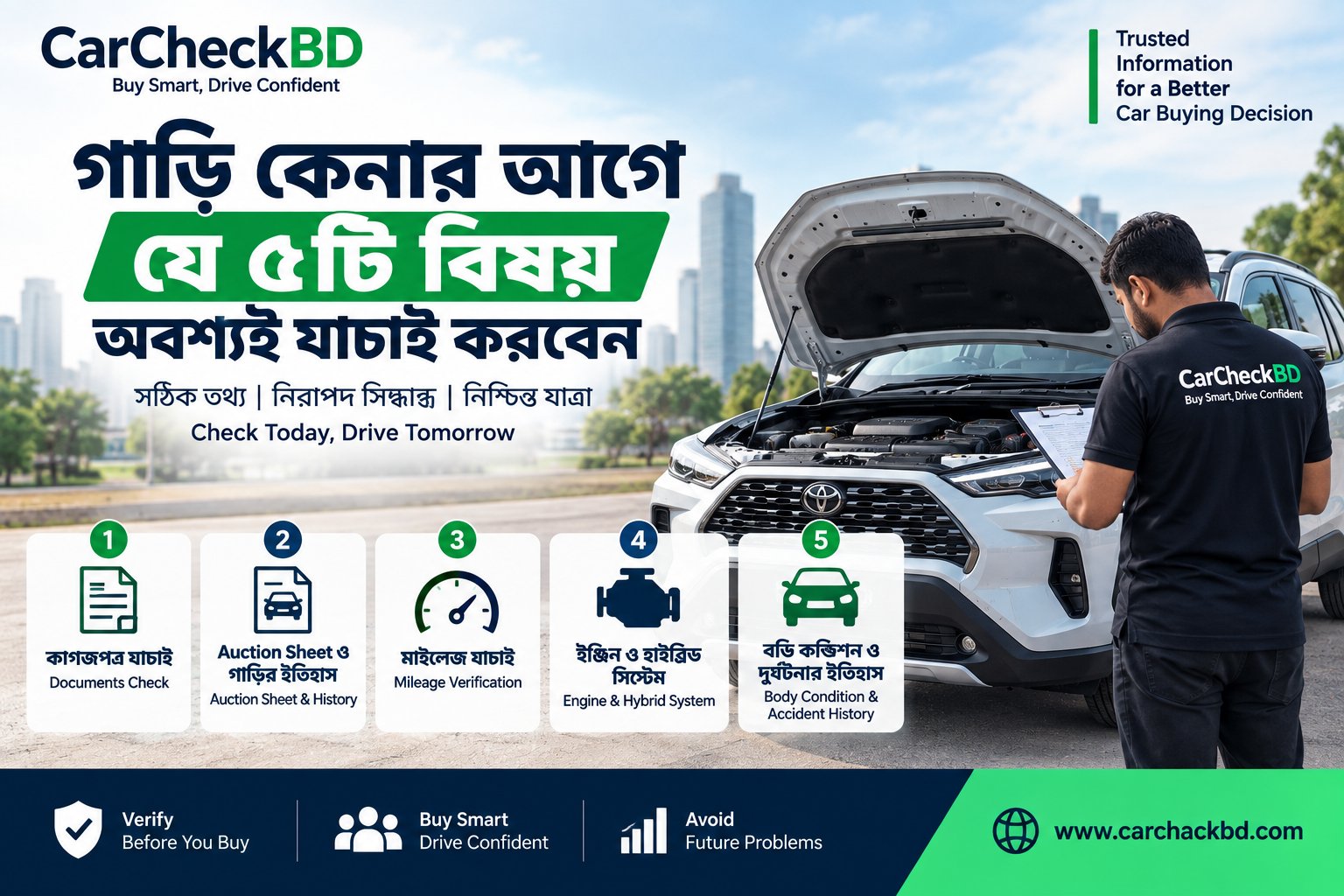
A Japanese auction sheet contains important information about a vehicle's condition and history. Learn how to understand auction grades, mileage, repair marks, accident history, interior condition, and other key details before buying a reconditioned car in Bangladesh.
Japanese Car Auction Sheet Explained: How to Check a Reconditioned Car
Buying a Japanese reconditioned car can be a great option, but understanding the vehicle's previous condition is extremely important. One of the most useful documents for a Japanese used car is the auction sheet.
A Japanese auction sheet can provide valuable information about the vehicle's mileage, condition, inspection grade, repair history, interior condition, and other details.
What Is a Japanese Auction Sheet?
A Japanese auction sheet is an inspection document prepared when a vehicle is listed for auction in Japan.
The sheet usually contains information about the vehicle and its condition, along with an auction grade and a vehicle diagram showing scratches, dents, repairs, and other observations.
What Does the Auction Grade Mean?
The auction grade provides a general indication of the vehicle's condition.
Depending on the auction house, grading systems can vary, so the grade should not be considered the only factor when evaluating a vehicle.
A higher grade generally indicates a better overall condition, while lower grades may indicate more wear, repairs, or other issues.
Check the Mileage
Mileage is one of the most important details on an auction sheet.
Compare the mileage shown on the auction sheet with the vehicle's current meter reading and other available records.
If there is a significant inconsistency, further verification should be performed before purchasing the vehicle.
Understand the Vehicle Diagram
The vehicle diagram is another important part of the auction sheet.
Inspectors may use different letters, numbers, symbols, and markings to indicate:
- Scratches
- Dents
- Repaired areas
- Repainted panels
- Rust
- Corrosion
- Other body-condition issues
Understanding these markings can help you identify areas that require closer inspection.
Check the Interior Grade
The interior condition is also commonly indicated on Japanese auction documents.
Look for information about interior cleanliness, stains, damage, wear, cigarette smell, or other issues where available.
A car with an excellent exterior may still require attention if its interior condition is poor.
Check for Accident or Repair History
One of the most important reasons to review an auction sheet is to understand whether the vehicle has had significant accident damage or structural repairs.
If the auction sheet indicates repaired or damaged areas, those sections should be carefully inspected before purchasing.
Why Auction Sheet Verification Matters
An auction sheet should be treated as an important source of vehicle information, but it should not be the only thing you check.
Before purchasing a reconditioned car, combine auction-sheet information with:
Auction history + mileage verification + physical inspection + mechanical inspection + document verification
This provides a much stronger basis for making a buying decision.
Final Thoughts
A Japanese auction sheet can help buyers understand the history and condition of a reconditioned vehicle before making a purchase.
However, simply seeing an auction grade is not enough. The details on the sheet should be properly understood and compared with the actual vehicle.
Verify the information before you buy, so you can make a smarter and more confident decision.
CarCheckBD — Buy Smart, Drive Confident.
Contact us if you need help with this topic.